
Gongju Travel: Places to Visit, 1-Night 2-Day Itinerary and City Stories
A city whose very name is full of story. Gongju locals still call one spot on the banks of the Geumgang River Gomanaru. It's the name of an old river ferry crossing lined with a thick pine grove, and also this city's old name.

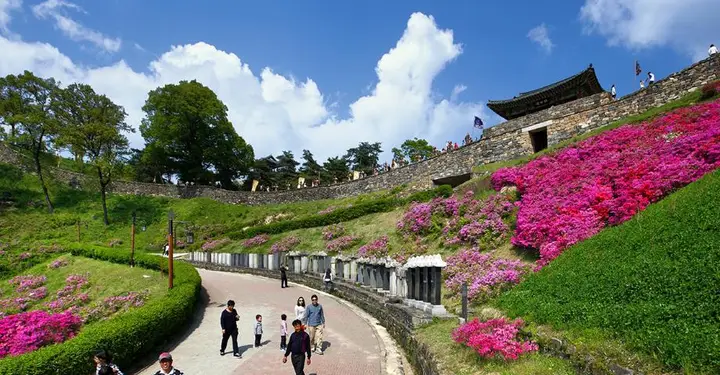
Gongju locals still call one spot on the banks of the Geumgang River Gomanaru. It's the name of an old river ferry crossing lined with a thick pine grove, and also this city's old name.
- Good for
- History experiences · Retro culture tours · Local eats/markets · Bakery pilgrimages & gukbap expeditions · Places from books
- Suggested itinerary
- 1-night 2-day · 11 places
- Must-sees
- Magoksa Temple · Gongsanseong Fortress · Gongju Royal Tomb of King Muryeong and Royal Tombs
- Traveler reviews
- 2 shared with consent
Contents
Why Gongju
The name comes from Gomnaru, the bear ferry on the river
Gongju locals still call one spot on the banks of the Geumgang River Gomanaru. It's the name of an old river ferry crossing lined with a thick pine grove, and also this city's old name. Here, goma is an old word for bear, and written in Chinese characters it became Ungjin (熊津), in other words, Gomnaru, the bear ferry.
A story comes with the name. A she-bear living on Yeonmisan Mountain across the river caught a woodcutter and kept him, living with him and bearing two children, but the man missed the human world and fled across the river. The bear chased him but couldn't catch him, and it's said she threw herself into the Geumgang River holding her two children. The story of a bear who wanted to become human lives on in the city's name.
Ungjin became Ungcheonju, then Ungju, and in 940, year 23 of King Taejo of Goryeo, it became today's Gongju (公州). It has kept that name for a thousand years.
Stand in the pine grove by the old ferry landing and the scent of pine mixes with the smell of the water. Once you know the name, the same river will look a little different.
It rose again from the place it was driven to
In 475, the people of Baekje lost Hanseong, came south, and set up their capital on this riverbank. It was a hurried move, and settling in was rough. King Munju, who moved the capital, was killed by one of his own subjects just two years later, and the young king who followed didn't last long either.
The one who rebuilt it was King Muryeong. Through the reigns of King Dongseong and King Muryeong, the kingdom's framework was rebuilt, and the sea route to China's Southern Dynasties, cut off by Goguryeo, was opened again.
That king's name was spoken again 1,500 years later. In the summer of 1971, a worker digging a drainage ditch at the Songsan-ri tombs hit a solid brick wall with the tip of his shovel. When the blocking bricks were removed, white vapor flowed out of the long-sealed tomb, and a stone tablet found inside was clearly inscribed that Great General Yeongdong, King Sama of Baekje, had passed away at age 62. Sama was King Muryeong's name. It was the first tomb from the Three Kingdoms period whose owner was clearly identified.
Not everything went well. Crowds rushed in, so the excavation was finished in a single night, and where and how the relics had been placed wasn't properly recorded. That's why it's called both the greatest discovery and the worst excavation.
Still, a name was saved. This is the place where someone no one had known about for 1,500 years got their name back. About 4,600 items from the tomb are at the Gongju National Museum across the road, so it's best to see the royal tomb first and then head over to the museum.
Across the Geumgang River: Gongju's three areas
It's easy once you put the river in the middle
When picturing Gongju, just draw the Geumgang River first. The river comes in from the east and cuts west across the middle of the city, and Gongsanseong Fortress and the old town sit along its southern bank.
Gongsanseong and Jemincheon: an old town to explore on foot
A long fortress wall lies along the hill south of the river. That's Gongsanseong Fortress.
Magoksa: the temple where people on the run went to hide
Head into the mountains to the northwest and you'll find a temple beside a valley. That's Magoksa Temple.
One mountain, but separate temples on the east and the west
At the southeastern end is Gyeryongsan Mountain. It became a national park in 1968, and it spans Gongju, Gyeryong, Nonsan and Daejeon.
Places to visit in Gongju
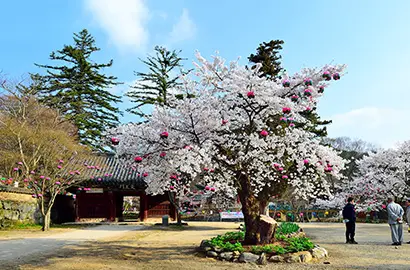
Magoksa Temple
A mountain temple listed as a UNESCO World Heritage Site and a famous spring spot called 'Chun Magok' (Magok in spring), loved for the beautiful layout of its buildings set along a valley stream shaped like the taegeuk symbol
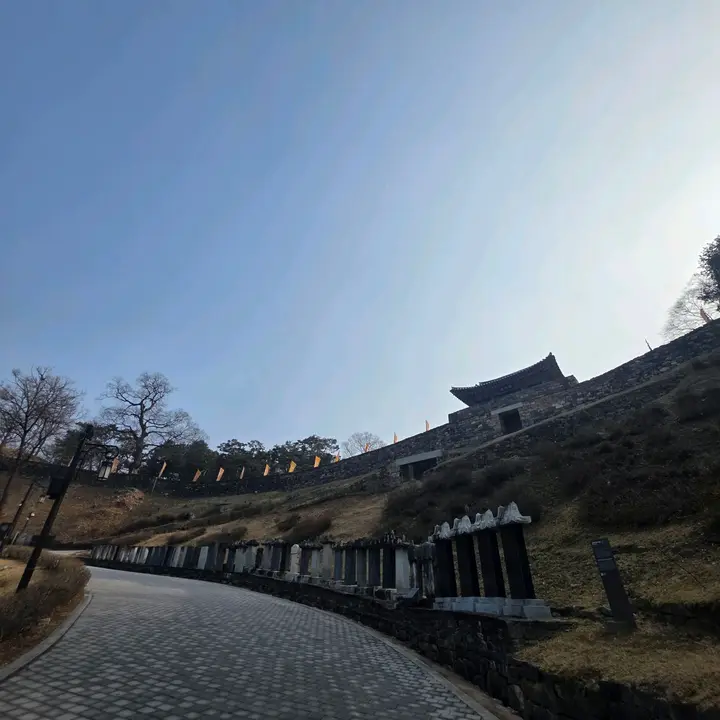
Gongsanseong Fortress
The royal fortress of Baekje's Ungjin period, built along a ridge overlooking the Geumgang River, where you can walk the fortress wall path and take in a full view of downtown Gongju
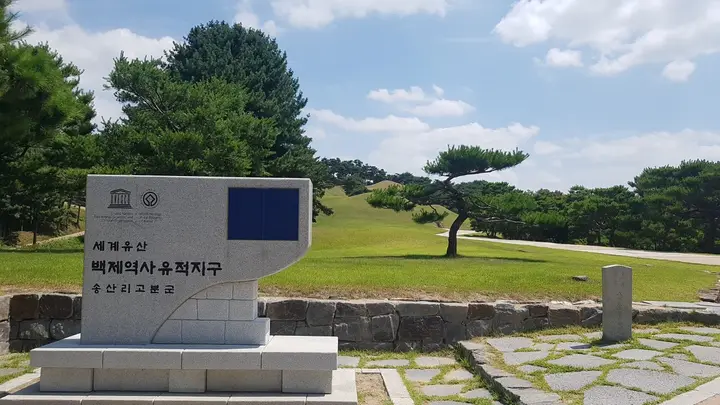
Gongju Royal Tomb of King Muryeong and Royal Tombs
A cluster of tombs of Baekje kings and queens from the Ungjin period, where you can feel the essence of Baekje culture, especially through the Tomb of King Muryeong, found perfectly preserved
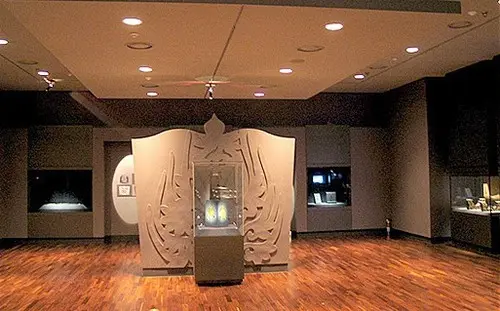
Gongju National Museum
A museum that systematically displays and preserves precious Baekje relics from the Chungcheongnam-do region, including the dazzling treasures excavated from the Tomb of King Muryeong
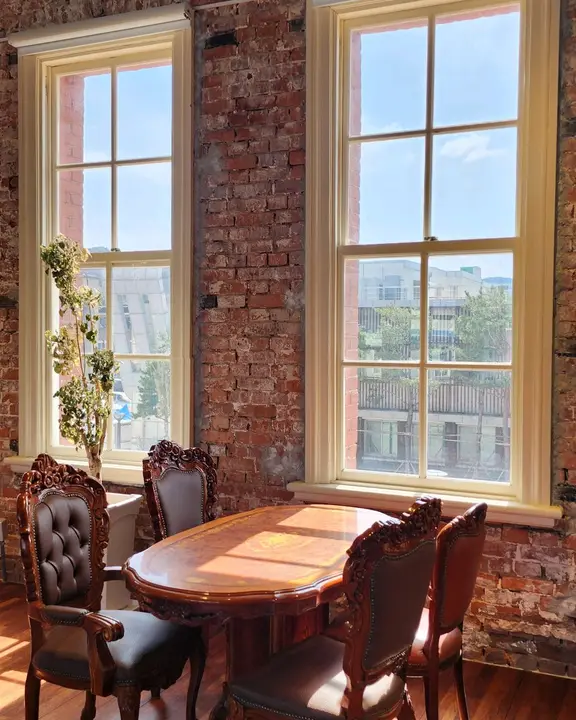
Former Gongju-eup Office
A modern-era building, once a financial institution during the Japanese colonial period and later used as the town office, now a history exhibition hall where you can see Gongju's modern history at a glance
Restaurants & cafes in Gongju
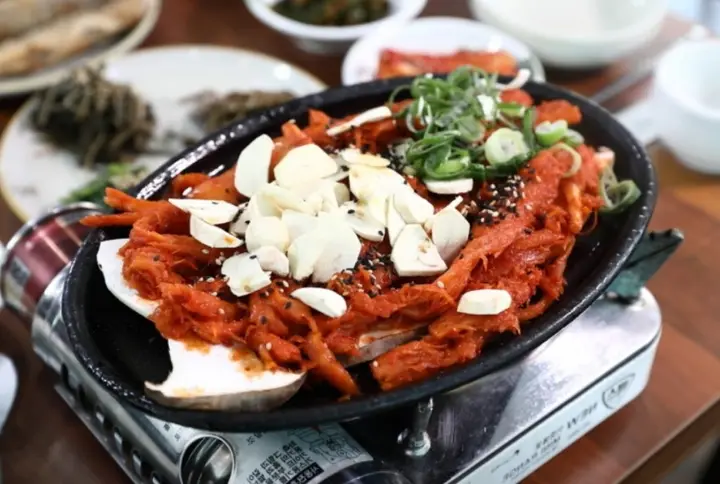
Magoksa Gwibin Sikdang
A Century Store Korean set-meal restaurant that opened in 1984 and has served authentic mountain-vegetable set meals made with eco-friendly ingredients for 37 years, now being passed down to the owner's daughter
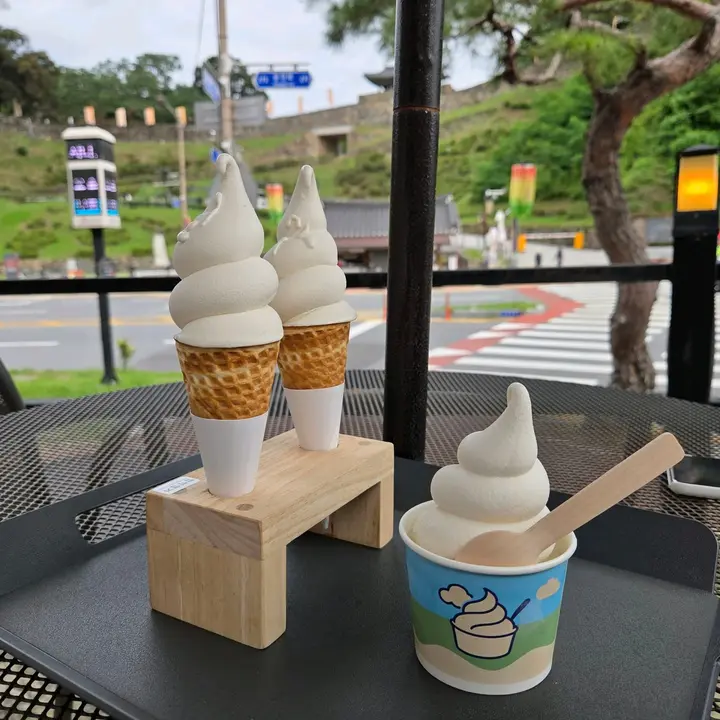
Haru Cafe & Bamtteok Myeongga
A cafe where you can take a break with chewy chestnut rice cakes and a cool tea, and a great place to buy traditional snacks made with Gongju specialties
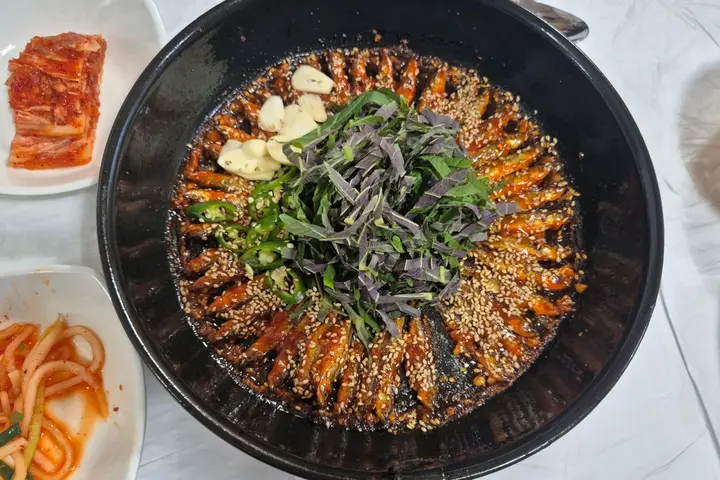
Eosatto
A local-recommended spot in Gongju known for savory eojuk (fish porridge) made with Gongju's famous chestnuts and crispy fried dori-baengbaeng
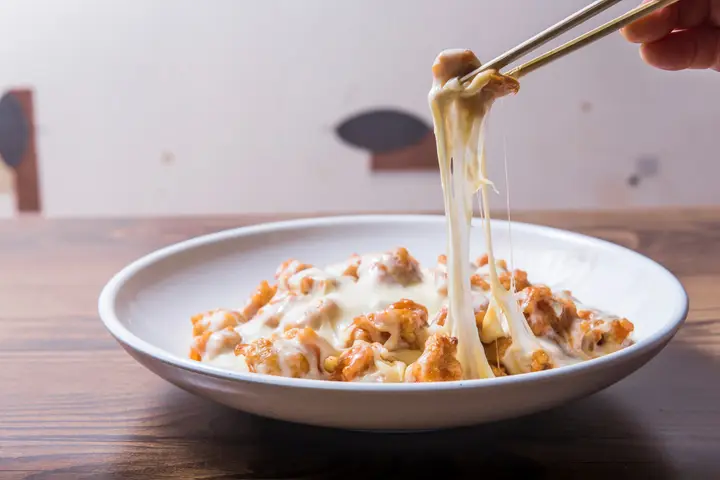
Bukgyeong Tangsuyuk
A place serving Gongju's iconic and unusual dish, 'kimchi pizza tangsuyuk (Gimpitang)', where tangy kimchi and cheese make an amazing combo
Gongju 1-night 2-day itinerary
This is the basic itinerary from the Randomtrip city guide. Places with closing days that overlap are noted in the table.
| Day | When | Where | Notes |
|---|---|---|---|
| Day 1 | Lunch | Magoksa Gwibin Sikdang | Restaurant |
| Day 1 | Afternoon | Magoksa Temple | Sightseeing |
| Day 1 | Afternoon | Haru Cafe & Bamtteok Myeongga | Cafe |
| Day 1 | Afternoon | Gongsanseong Fortress | Sightseeing |
| Day 1 | Dinner | Eosatto | Restaurant · Closed Mondays |
| Day 2 | Morning | Gongju Royal Tomb of King Muryeong and Royal Tombs | Sightseeing |
| Day 2 | Morning | Gongju National Museum | Sightseeing · Closed Mondays |
| Day 2 | Lunch | Bukgyeong Tangsuyuk | Restaurant · Closed Mondays, Thursdays & Fridays |
| Day 2 | Afternoon | Ajeossi Coffee | Cafe · Closed Wednesdays |
| Day 2 | Afternoon | Former Gongju-eup Office | Sightseeing · Closed Mondays |
| Day 2 | Afternoon | Na Tae-ju Pulkkot Literary Museum | Sightseeing · Closed Mondays |
What's new in Gongju
- Baekje Cultural Festival No. 72 (Gongju) · 2026.10.03 – 10.11 · See Ungjin Baekje history through performances and parades
- Korail Travel Month · Train fare coupons · Korail gives back the amount of your train fare as a discount coupon for your next train (travel period until 11.30)
For a more detailed schedule, see This month's festival schedule. For benefits, see the Half-Price Travel roundup.
Stories from travelers who've been
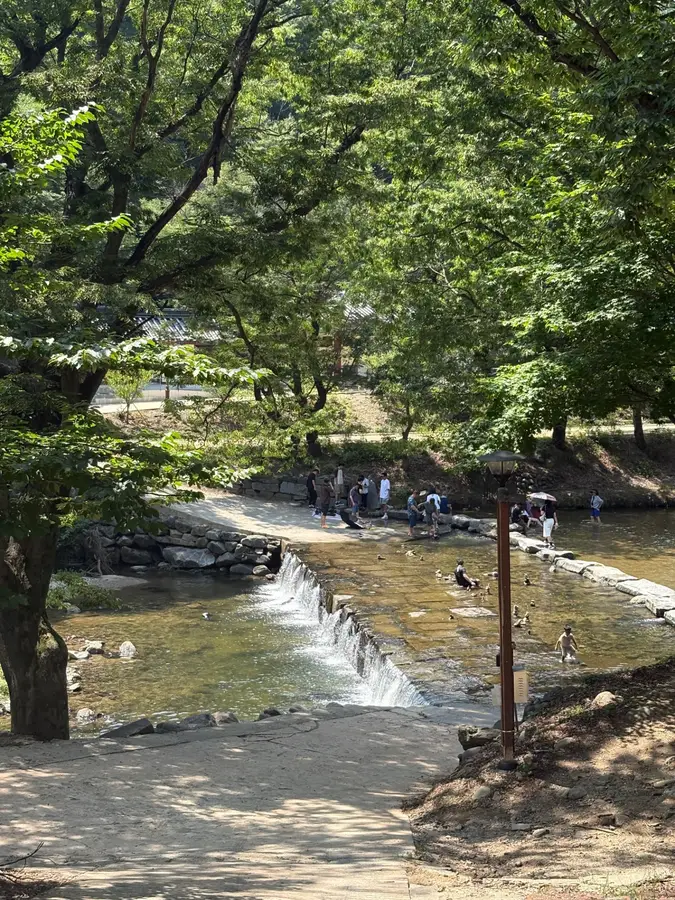
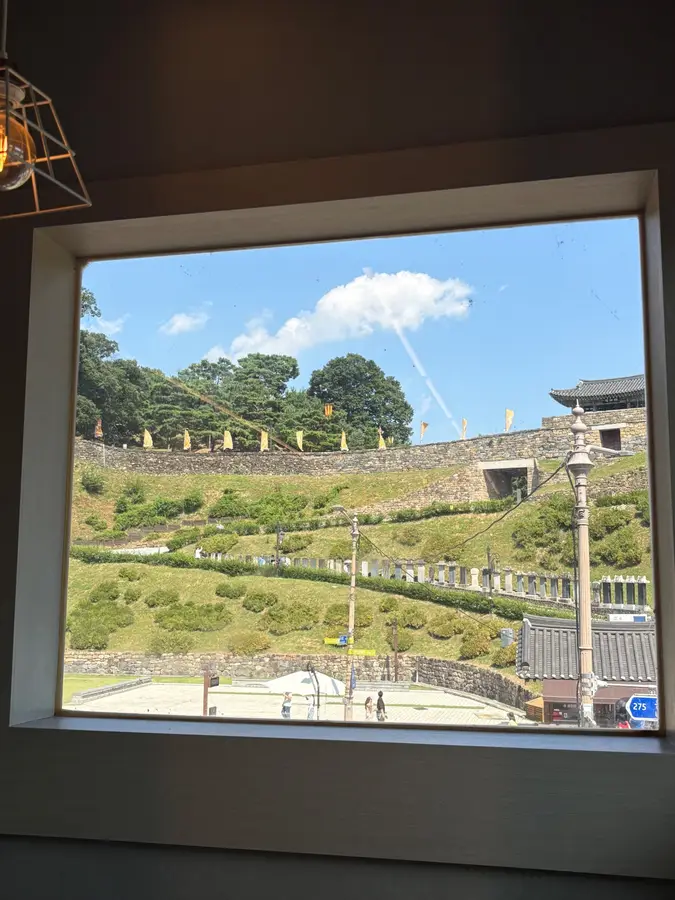
“As an MBTI J, I felt anxious about not knowing the exact details until right before the trip, but excited and thrilled at the same time, and now I think traveling this way is great too! Since it wasn't a perfect plan, it was still fun even when things went a little off, and I didn't feel too disappointed when things didn't go the way I wanted. It was a refreshing experience to visit a place I would never have considered if I'd had to plan it myself.…”
Jeong*yun · With a partner · 2026.08 · Traveled with Randomtrip“The tourist sites were close to each other, so it was easy to get around. But the downtown area (where the market, restaurants, etc. are) was a bit far to walk. There was a lot of flat ground, so we walked for exercise, and every cafe had unique chestnut menu items, which was fun. I'd recommend it to anyone who loves chestnuts.”
An*min · With family · 2026.09 · Traveled with RandomtripFAQ
How should I plan a 1-night 2-day trip to Gongju?
We recommend this order. Day 1: Magoksa Gwibin Sikdang → Magoksa Temple → Haru Cafe & Bamtteok Myeongga → Gongsanseong Fortress → Eosatto. Day 2: Gongju Royal Tomb of King Muryeong and Royal Tombs → Gongju National Museum → Bukgyeong Tangsuyuk → Ajeossi Coffee → Former Gongju-eup Office → Na Tae-ju Pulkkot Literary Museum.
Are there any places in Gongju with closing days to watch out for?
Watch out for Eosatto (closed Mondays), Gongju National Museum (closed Mondays), Bukgyeong Tangsuyuk (closed Mondays, Thursdays and Fridays), Ajeossi Coffee (closed Wednesdays), Former Gongju-eup Office (closed Mondays), and Na Tae-ju Pulkkot Literary Museum (closed Mondays). Check the days of the week first.
What kind of trip is Gongju good for?
It's a great city for history experiences · retro culture tours · local eats/markets · bakery pilgrimages & gukbap expeditions · visiting places from books.
- Randomtrip city guide · Gongju text, places & itinerary · Checked 2026.10.01
- 2 Randomtrip traveler reviews (shared with consent, names partially hidden)
You might also like
The origin of Gongju's Gukgogae: how a hill where soup was spilled became a neighborhood name
In the old town there's a slope called Gukgogae. During the Goryeo dynasty, a man named Yi Bok lived in this town. He lost his father early and lived alone with his blind mother.
Andong salted mackerel: how did it become a specialty of a mountain town with no sea?
Andong is inland. The sea is more than a hundred li away. And yet this city's signature dish is mackerel. The reason is salt.