
Dongguksa Temple in Gunsan: Korea's last Japanese-style temple and its stele of repentance
Dongguksa in Gunsan is described as the only Japanese-style temple built during the Japanese colonial period that still survives today. On the grounds, you'll find a stele of repentance put up by Japanese monks and a Statue of Peace made with donations from local citizens.

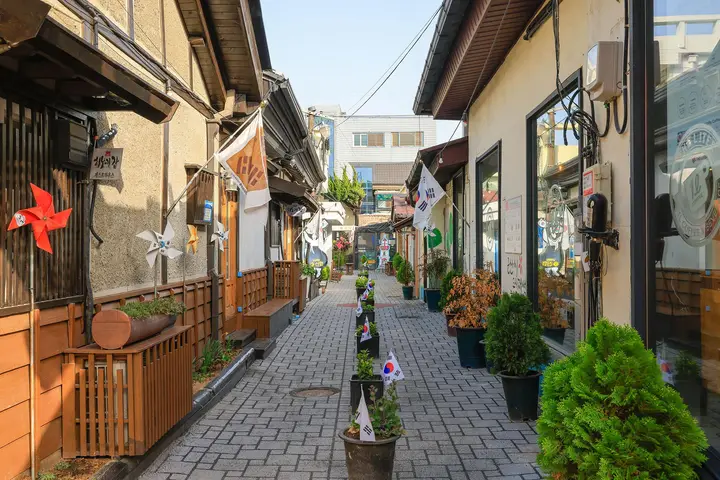
- Origins
- 1909, a missionary space opened by a Japanese Soto Zen monk
- Main hall
- Built in 1932 (Korea Heritage Service records); National Registered Cultural Heritage since July 15, 2003
- Significance
- Described as the only survivor among some 500 Japanese-style temples from the colonial period
- Chamsamunbi
- September 16, 2012; erected by Japan's Soto Zen school, engraved with its 1992 statement of repentance
- Statue of Peace
- August 12, 2015; the first in Jeonbuk, funded by citizens' donations
- Treasure
- Clay Shakyamuni Buddha Triad and Enshrined Relics of Dongguksa Temple, Gunsan (1650)
- Checked on
- 2026.10.09
The one temple left of some 500 Japanese-style temples
The story of Dongguksa
Dongguksa in Geumgwang-dong, Gunsan has a steep roof and rows of sliding doors on its outer walls, so at first glance it looks different from Korean temples. The corridor connecting the main hall to the yosachae, where the monks live, is also a feature of Japanese temple architecture. The Korea Heritage Service records this main hall as a building constructed in 1932 as the Buddha hall of Geumgangsa, a Japanese Soto Zen temple that came in after the port opened, and registered it as National Registered Cultural Heritage in July 2003.[1]
The temple began in 1909 as a missionary space opened in Gunsan by a Japanese Soto Zen monk. After liberation, it became Dongguksa, a temple of the Jogye Order. Some 500 Japanese-style temples are known to have been built on the Korean Peninsula during the colonial period, and Dongguksa is described as the only one still standing today.[1][4][5][6]
On September 16, 2012, the Soto Zen school, Japan's largest Buddhist order, erected the Chamsamunbi on the temple grounds. The stele, 3 m wide and 2.3 m tall, is engraved with the statement of repentance the Soto school issued in 1992, in the original Japanese and in Korean translation. It repents for leading the way in human rights abuses, contempt for local culture and assimilation policies under the name of overseas missionary work.[5]
On August 12, 2015, a Statue of Peace made with donations collected by Gunsan citizens was erected on the grounds of Dongguksa, the first in Jeonbuk. In August 2025, the tenth Gunsan Statue of Peace Cultural Festival was also held in front of the statue on the grounds.[7][8]
Dongguksa also houses a clay Shakyamuni Buddha Triad made in 1650, in the late Joseon period, along with the relics found inside it. It's a large statue over 150 cm tall, with the disciples Kasyapa and Ananda on either side of Shakyamuni, and it was designated a Treasure after it was found to be the work of a sculptor-monk active in the Jeolla region. So a temple that began as a Japanese-style building now enshrines a Joseon Buddha.[2]
Good to know before you go
- Address
- 16 Dongguksa-gil, Gunsan-si, Jeonbuk State
- Hours
- Sunrise to sunset (per the Korea Tourism Organization's barrier-free travel guide)
- Closed
- None (per the same guide)
- Admission
- Free
- Good to know
- It's about 700 m from Chowon Photo Studio, so it pairs well with a walk through the modern-history streets. Monks still live at the temple, so please keep quiet inside the halls. For questions, contact the Gunsan Modern History Information Center (063-446-5114).
More to see in Gunsan
In the Gunsan travel guide, you can keep reading about courses, restaurants and closing days. Gunsan is one of the cities Randomtrip picks for you.
FAQ
Why does Dongguksa look Japanese?
Because it was built as a temple of Japan's Soto Zen school during the Japanese colonial period. The steep roof, the sliding doors on the outer walls, and the corridor linking the main hall to the monks' quarters are features of Japanese temple architecture. After liberation, it became a temple of the Jogye Order.
Is there an admission fee?
No. According to the Korea Tourism Organization's barrier-free travel guide, it's open from sunrise to sunset with no closing days.
What is the Chamsamunbi?
It's a stele put up in 2012, engraved with a 1992 document in which Japan's Soto Zen school repented for the wrongs it committed through overseas missionary work during the period of invasion. The original Japanese text and a Korean translation are engraved together.
- [1] Korea Heritage Service Heritage Info - Main Hall of Dongguksa Temple, Gunsan (National Registered Cultural Heritage) · Checked 2026.10.09 · Source
- [2] Korea Heritage Service Heritage Info - Clay Shakyamuni Buddha Triad and Enshrined Relics of Dongguksa Temple, Gunsan (Treasure) · Checked 2026.10.09 · Source
- [3] Korea Tourism Organization Barrier-Free Travel - Recommended Gunsan course (Dongguksa) · Checked 2026.10.09 · Source
- [4] VisitKorea - A Gunsan trip walking through time (info written December 2021) · Checked 2026.10.09 · Source
- [5] Seoul Shinmun - Japanese Buddhists erect 'stele of repentance' apologizing for past atrocities (2012-09-12) · Checked 2026.10.09 · Source
- [6] Jeonbuk Ilbo - Venerable Jonggeol, head monk of Dongguksa in Gunsan, sets out to find records of Japanese colonial exploitation (2014-03-05) · Checked 2026.10.09 · Source
- [7] Jeonbuk Ilbo - [Modern history trips around Korea] Gunsan: remembering ordinary people's lives and spirit of resistance under harsh Japanese control (2019-09-10) · Checked 2026.10.09 · Source
- [8] Jeonbuk Ilbo - Gunsan Statue of Peace Cultural Festival (No. 10) held (2025-08-13) · Checked 2026.10.09 · Source
You might also like
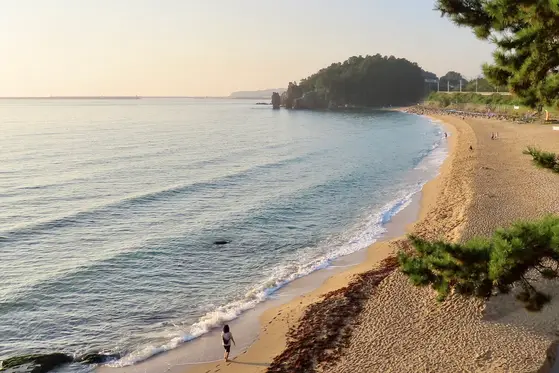
Donghae Travel: Places to Visit, 1-Night 2-Day Itinerary and City Stories
A city with stories that go beyond the sea. True to its name, it's the first to greet the red sunrise, and it holds the wide blue sea in its arms. But Donghae's real charm is that it doesn't stop at the sea.
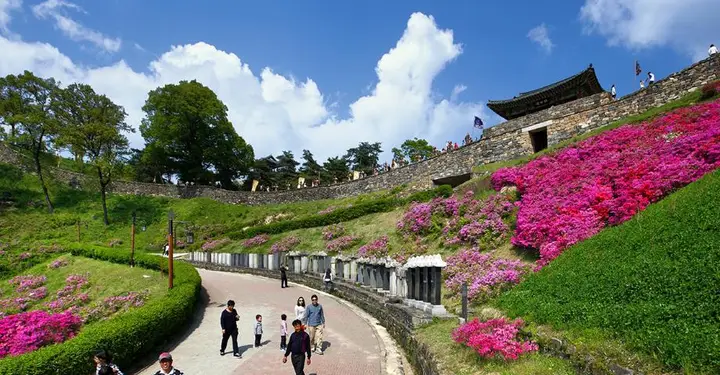
Gongju Travel: Places to Visit, 1-Night 2-Day Itinerary and City Stories
A city whose very name is full of story. Gongju locals still call one spot on the banks of the Geumgang River Gomanaru. It's the name of an old river ferry crossing lined with a thick pine grove, and also this city's old name.
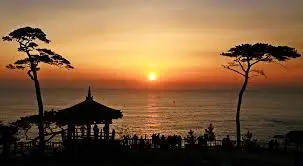
Yangyang Travel: Places to Visit, 1-Night 2-Day Itinerary and City Stories
Yangyang, the land where the sun rises. The name Yangyang was given in 1416. It was borrowed as-is from Yangyang (Xiangyang) on the banks of China's Hanshui River, because this area's terrain and natural beauty resembled it.