
Hadong's Hwagae, the valley where Korean tea is said to have first been planted
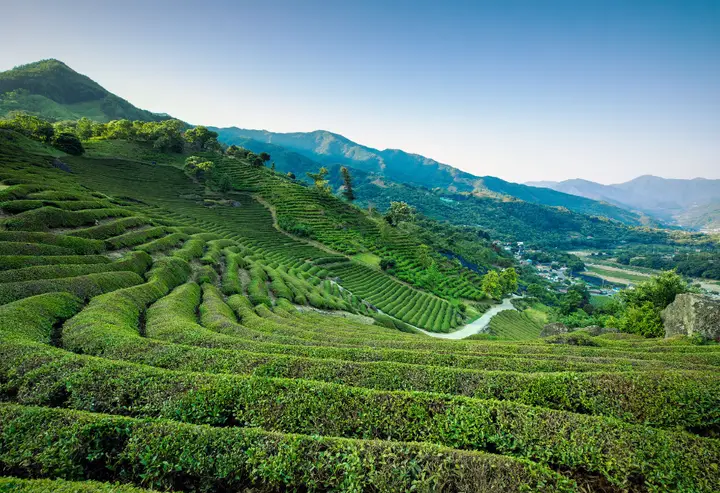
The Samguk Sagi records that an envoy returning from Tang China in 828 brought tea seeds that were planted on Jirisan. Hwagae in Hadong is the valley known as that spot, and the way tea has been grown there on steep slopes and between rocks became a Globally Important Agricultural Heritage System.

- Record
- Samguk Sagi: in year 3 of King Heungdeok (828), tea seeds Daeryeom brought from Tang China were planted on Jirisan
- Hadong planting site
- Unsu-ri area, Hwagae-myeon; Gyeongnam Monument in 1983 → Gyeongnam Natural Heritage on March 27, 2025
- Gurye's claim
- Jangjukjeon below Hwaeomsa; designated a Jeonnam Monument in 1991
- Agricultural heritage
- National Important Agricultural Heritage No. 6 in 2015; FAO Globally Important Agricultural Heritage in 2017
- Tea fields
- About 12 km along both banks of Hwagaecheon Stream, grown on steep slopes and between rocks
- Tea-picking season
- Usually late April to late May, with grades by timing: ujeon, sejak, jungjak and daejak
- Checked on
- 2026.10.11
Where on Jirisan were the tea seeds from Tang China planted in 828?
The story of Hwagae's tea planting site and wild tea fields
The Silla Annals of the Samguk Sagi, in its entry for year 3 of King Heungdeok (828), records that when Daeryeom, who had gone to Tang China as an envoy, returned with tea seeds, the king had them planted on Jirisan. It also notes that tea had existed since the time of King Seondeok but spread widely from this point. Daeryeom went to Tang as an envoy to congratulate the new year, met Emperor Wenzong, and returned in December that year.[1][2][6]
The place named in the record goes only as far as 'Jirisan.' Hadong sees the Unsu-ri area of Hwagae-myeon, where Ssanggyesa Temple stands, as that spot. It was designated a Gyeongsangnam-do Monument (former designation No. 61) in 1983 under the name 'Hadong Ssanggyesa tea tree planting site,' and was re-designated as Gyeongsangnam-do Natural Heritage on March 27, 2025. A memorial stone for Daeryeom's tea planting went up in 1981, and a marker stone put up by Hadong County and the local tea society in 1992.[3][4][5]
Across Jirisan in Gurye, Jeonnam, there is also a claim to the planting site. One view holds that 'Jangjukjeon' below Hwaeomsa is where tea was first planted, and it was designated a Jeollanam-do Monument in 1991. Both places are on the foothills of Jirisan, and Hadong and Gurye each present their own town as the planting site.[2][6]
About 91% of Hwagae-myeon's land is steep mountain terrain. 'Traditional Hadong tea farming' is the method of planting and tending tea trees on slopes and between rocks where rice paddies are hard to make. In March 2015 the Ministry of Agriculture, Food and Rural Affairs designated it National Important Agricultural Heritage No. 6, and in 2017 the UN Food and Agriculture Organization (FAO) listed it as a Globally Important Agricultural Heritage System (GIAHS). In Korea, it was the third listing after Cheongsando's gudeuljang rice terraces and Jeju's stone-walled fields. Even now tea fields continue for about 12 km along both banks of Hwagaecheon Stream, from the mountain foot near Hwagae Market past Ssanggyesa to Beomwang-ri, and tea leaves are usually picked from late April to late May.[7][8][9][2][10]
If you want to taste the tea yourself, start at the Hadong Wild Tea Museum below the planting site. It displays old tea tools and tea-related artifacts, and also runs tea ceremony, tea-picking and pan-roasting experiences. Around early May each year, the Hadong Wild Tea Culture Festival is held around Hwagae-myeon. Hadong green tea is also used as a cosmetics ingredient. In August 2022, CJ Olive Young signed an agreement with the Hadong Green Tea Institute, switching the raw material of the green tea line of its own brand Round a Round from Jeju- and Boseong-grown to Hadong-grown green tea, and said it would use more than 10 tons a year.[13][11][12][5][14][15]
Good to know before you go
- Address
- Around Unsu-ri, Hwagae-myeon, Hadong-gun, Gyeongnam (tea planting site); the Hadong Wild Tea Museum is at 571-25 Ssanggye-ro, Hwagae-myeon
- Hours
- The tea planting site is an open-air tea field area. Hadong Wild Tea Museum: March–October 10:00–18:00; November–February 10:00–17:00 (per the September 2026 revision of Korea Tourism Organization tourism info)
- Closed
- Hadong Wild Tea Museum is closed every Monday, on January 1, and on the days of Lunar New Year and Chuseok (same source)
- Admission
- Museum admission is free; experiences cost extra (tea ceremony 5,000 KRW, tea-picking 3,000 KRW, pan-roasting and dontcha 9,000 KRW each; same source)
- Getting there
- The simplest route is to take an intercity bus bound for Hadong from Seoul Nambu Terminal (Nambu Terminal Station, subway Line 3) and get off at Hwagae Terminal. It runs 8 times a day (06:40–19:30) and takes about 3 hr 30 min to Hwagae, and about 4 hours to Hadong Bus Terminal on the same bus (per the October 2026 timetable). By train, take the KTX from Seoul Station to Jinju Station (about 3 hr 30 min), then a Hadong-bound bus from Jinju Intercity Bus Terminal (about 1 hour). You can also take the KTX from Yongsan Station to Suncheon Station (about 2 hr 40 min) and then a Gyeongjeon Line train to Hadong Station (about 25 minutes), but only a few trains a day run on that section. Between Hadong Bus Terminal and Hwagae Terminal, an intercity bus takes about 25 minutes (3,100 KRW). From Hwagae Terminal, the tea planting site on the Ssanggyesa side is a few kilometers away, so go by taxi or county rural bus.
- Good to know
- Only 8 buses a day connect Seoul and Hwagae, and the last bus from Hwagae to Seoul is at 19:25 (per the October 2026 timetable). Settle on your return transport first. Since July 2024, Hadong County's rural buses have cost tourists only 100 KRW per ride too (per a March 2026 news report). To see tea leaves being picked, it's best to go from late April to May.
FAQ
Did Korean tea really begin in Hadong?
The Samguk Sagi only says that tea seeds brought by Daeryeom in 828 were planted on 'Jirisan.' The Unsu-ri area of Hwagae in Hadong and Jangjukjeon below Hwaeomsa Temple in Gurye are each named as that spot, and both have a history of being designated provincial heritage.
Are Hadong's tea fields a UNESCO World Heritage Site?
No. They are a Globally Important Agricultural Heritage System designated by the UN Food and Agriculture Organization (FAO). 'Traditional Hadong Tea Agrosystem' was listed in 2017.
How long does it take to get from Seoul to Hwagae by public transit?
Take an intercity bus bound for Hadong from Seoul Nambu Terminal and get off at Hwagae Terminal; it takes about 3 hr 30 min. As of the October 2026 timetable, it runs 8 times a day, so please check times before you go.
- [1] Encyclopedia of Korean Culture (Academy of Korean Studies) - Daeryeom · Checked 2026.10.11 · Source
- [2] Encyclopedia of Korean Culture (Academy of Korean Studies) - Ssanggyesa tea tree planting site · Checked 2026.10.11 · Source
- [3] Digital Hadong Culture Encyclopedia (Academy of Korean Studies) - Hadong Ssanggyesa tea tree planting site · Checked 2026.10.11 · Source
- [4] Korea Heritage Portal (Korea Heritage Service) - Hadong Ssanggyesa tea tree planting site · Checked 2026.10.11 · Source
- [5] Seoul Shinmun - Hadong, the tea planting site, holds the Hadong Wild Tea Culture Festival in May (2022-01-19) · Checked 2026.10.11 · Source
- [6] Encyclopedia of Korean Culture (Academy of Korean Studies) - Gurye Jangjukjeon green tea planting site · Checked 2026.10.11 · Source
- [7] FAO GIAHS - Traditional Hadong Tea Agrosystem in Hwagae-myeon, Republic of Korea · Checked 2026.10.11 · Source
- [8] Pressian - Decision to list Hadong's traditional tea farming as a UN FAO Globally Important Agricultural Heritage System (2017-11-29) · Checked 2026.10.11 · Source
- [9] Seoul Shinmun - Hadong green tea fields listed as a Globally Important Agricultural Heritage System (2017-11-30) · Checked 2026.10.11 · Source
- [10] Rural Development Administration webzine - Wild tea country with 1200 years of history (September 2020) · Checked 2026.10.11 · Source
- [11] Korea Tourism Organization tourism info (posted on ktriptips) - Hadong Wild Tea Museum (revised 2026-09-11) · Checked 2026.10.11 · Source
- [12] Seoul Shinmun - Enjoying spring along with the scent of tea leaves... shall we head to Hadong for some Tea? (2025-05-02) · Checked 2026.10.11 · Source
- [13] Seoul Shinmun - Pan-roasting a thousand years, polishing the heart (2018-05-10) · Checked 2026.10.11 · Source
- [14] CJ Newsroom - CJ Olive Young's Round a Round overhauls its 'green tea line' from ingredients to packaging (2022-08-18) · Checked 2026.10.11 · Source
- [15] Seoul Shinmun - Making cosmetics from Hadong green tea... agreement between Hadong Green Tea Institute and CJ Olive Young (2022-08-18) · Checked 2026.10.11 · Source
- [16] Asamaru bus timetable - Seoul Nambu Terminal → Hwagae (updated 2026-10-08) · Checked 2026.10.11 · Source
- [17] Asamaru bus timetable - Seoul Nambu Terminal → Hadong Bus Terminal (updated 2026-10-08) · Checked 2026.10.11 · Source
- [18] Asamaru bus timetable - Routes departing Hwagae Bus Terminal (Hwagae → Hadong/Seoul Nambu) · Checked 2026.10.11 · Source
- [19] Asamaru bus timetable - Routes departing Hadong Bus Terminal (Hadong → Jinju) · Checked 2026.10.11 · Source
- [20] Asamaru train timetable - Seoul Station → Jinju Station KTX · Checked 2026.10.11 · Source
- [21] Asamaru train timetable - Yongsan Station → Suncheon Station KTX · Checked 2026.10.11 · Source
- [22] Metro Seoul - Hadong County's 100 KRW bus extended to all residents and outside visitors (2024-07-01) · Checked 2026.10.11 · Source
- [23] Asia Economy - Gyeongnam's first 'all-resident 100 KRW bus'... Hadong County's transportation welfare policy draws attention (2026-03-12) · Checked 2026.10.11 · Source
You might also like
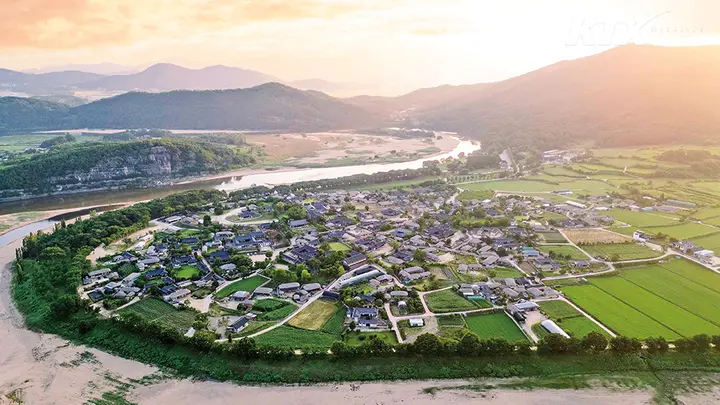
Small-town trips outside Seoul: 7 roadblocks for foreign travelers
Head to a small city like Andong, Gongju or Gunsan and you'll run into walls that Seoul doesn't have: topping up transit cards, map apps, bus tickets, taxis, restaurant hours, museum closing days and accommodation verification. This guide sorts out seven roadblocks and the workarounds, checked as of October 2026.
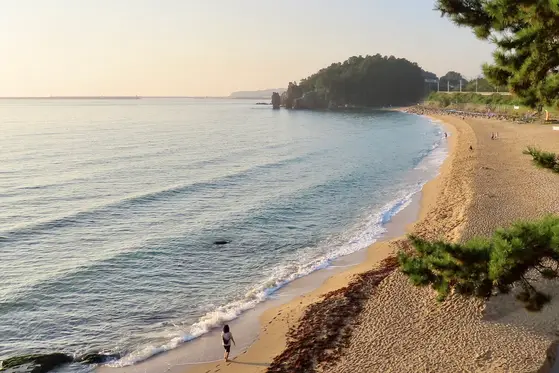
Donghae Travel: Places to Visit, 1-Night 2-Day Itinerary and City Stories
A city with stories that go beyond the sea. True to its name, it's the first to greet the red sunrise, and it holds the wide blue sea in its arms. But Donghae's real charm is that it doesn't stop at the sea.
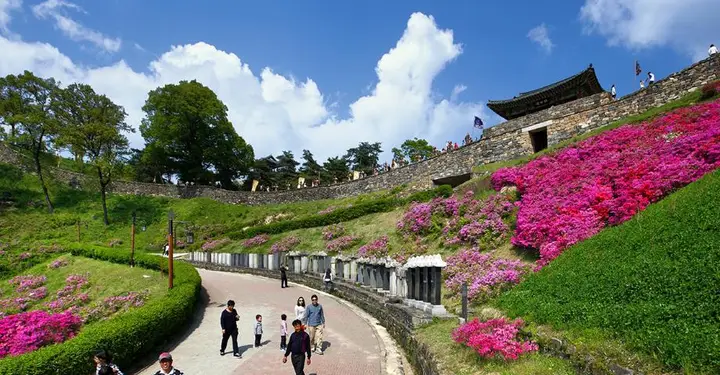
Gongju Travel: Places to Visit, 1-Night 2-Day Itinerary and City Stories
A city whose very name is full of story. Gongju locals still call one spot on the banks of the Geumgang River Gomanaru. It's the name of an old river ferry crossing lined with a thick pine grove, and also this city's old name.