
Mukho Nongoldam-gil: the story of a port village left in its steep alleys
When Mukho Port was booming, fishermen carried heavy fish crates up these steep slopes. Seawater dripping from the crates kept the dirt path as muddy as a rice paddy, so people called this place Nongol.

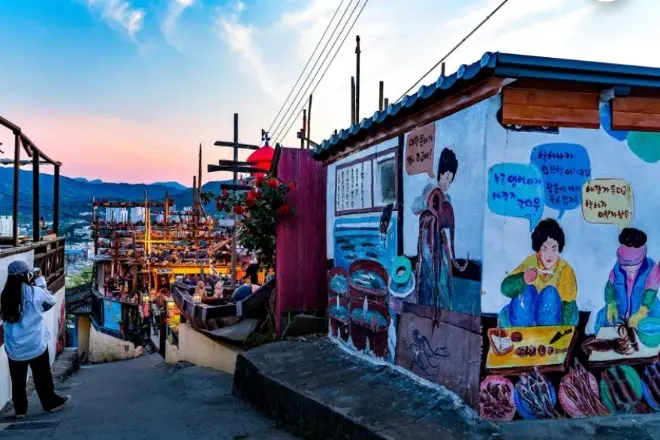
When Mukho Port was booming, fishermen carried heavy fish crates up these steep slopes. Seawater dripping from the crates kept the dirt path as muddy as a rice paddy, so people called this place Nongol.
Mukho: deep longing soaked into every steep alley
Back when Mukho Port was booming, fishermen climbed this steep slope carrying heavy crates of fish. Seawater dripping from the crates kept the dirt path muddy like a rice paddy, so people called this place Nongol.
The strong fishy smell that stung your nose was the smell of relief, meaning you could send your kids to school. But the sea sometimes swallowed boats, and many never came back, so locals would hold back their grief, saying "Half of Mukho's people have no grave."
The tough struggles and longing of those left behind now decorate Nongol-damgil as warm murals. The figure of "Wonder Halmae," who climbed up and down this path carrying heavy loads, lives on in the paintings too.
Right next door, Dojjaebigol holds touching stories: of goblin fires flickering on rainy nights, and of people with nowhere to go building huts on the hillside like swallows' nests, earning it the name "Tto Jebigol." Today it has become a grand Sky Walk where you stroll above the sea.
At night, the harbor lights settling below the lighthouse will gently warm your heart, like stars scattered across the ground.
If you want to go yourself
- Nongol-damgil — Donghae's signature scenic walk, where murals painted by villagers and artists together capture stories of the East Sea and moments of everyday life
We've gathered more Donghae stories and routes in the Donghae travel guide.
- Randomtrip city guide · Donghae introduction · Checked 2026.10.01
You might also like
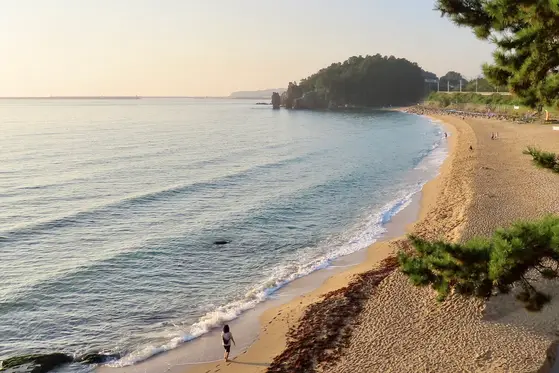
Donghae Travel: Places to Visit, 1-Night 2-Day Itinerary and City Stories
A city with stories that go beyond the sea. True to its name, it's the first to greet the red sunrise, and it holds the wide blue sea in its arms. But Donghae's real charm is that it doesn't stop at the sea.
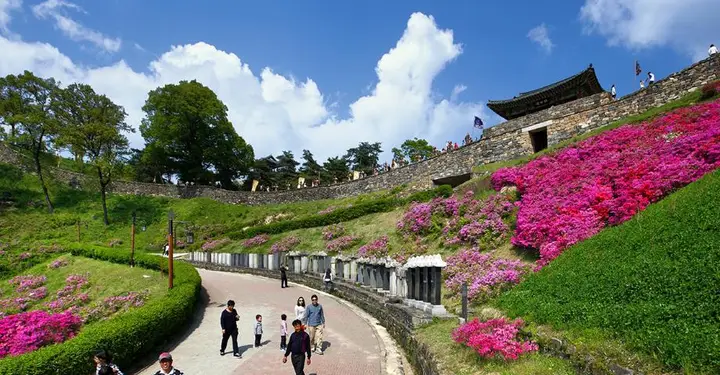
Gongju Travel: Places to Visit, 1-Night 2-Day Itinerary and City Stories
A city whose very name is full of story. Gongju locals still call one spot on the banks of the Geumgang River Gomanaru. It's the name of an old river ferry crossing lined with a thick pine grove, and also this city's old name.
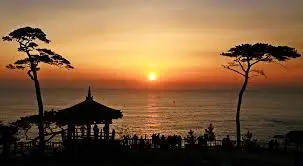
Yangyang Travel: Places to Visit, 1-Night 2-Day Itinerary and City Stories
Yangyang, the land where the sun rises. The name Yangyang was given in 1416. It was borrowed as-is from Yangyang (Xiangyang) on the banks of China's Hanshui River, because this area's terrain and natural beauty resembled it.