
Ganwolam on Ganwoldo, Seosan: an island where the sea opens a path twice a day
This is where the sun sets most beautifully in Seosan. Ganwolam is a small hermitage that becomes an island when the tide comes in and a path when the tide goes out. Legend has it that the monk Muhak Daesa practiced here in the early Joseon period, and because he reached enlightenment while gazing at the moon, it got the name Ganwol (看月, 'looking at the moon').

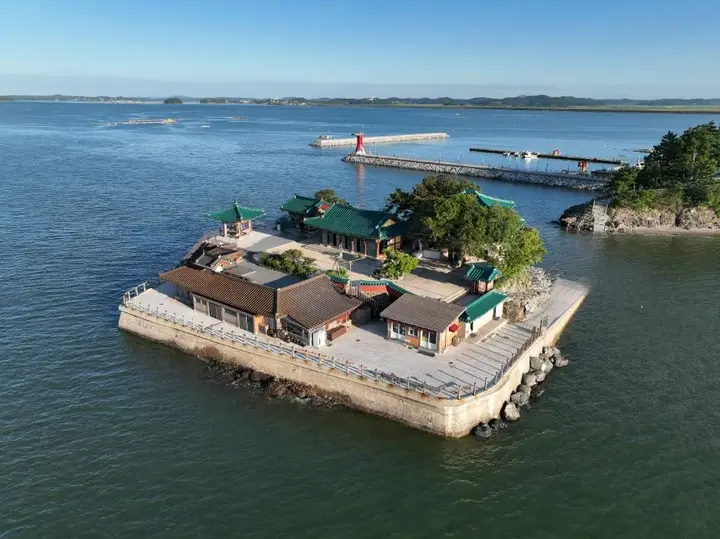
This is where the sun sets most beautifully in Seosan. Ganwolam is a small hermitage that becomes an island when the tide comes in and a path when the tide goes out.
Ganwoldo: twice a day, the sea opens a path
This is where the sun sets most beautifully in Seosan.
Ganwolam is a tiny hermitage that becomes an island at high tide and is reachable on foot at low tide. Legend has it that Great Master Muhak practiced here in the early Joseon period and found enlightenment while gazing at the moon, which gave it the name Ganwol, "looking at the moon." The hermitage itself is very small. But stand at the edge of its courtyard and look out to sea, and the entire West Sea tidal flat fills your view.
Here are the times you can walk across during this trip.
Sat 12, 10 a.m. to 1 p.m. · Sun 13, 10:30 a.m. to 1:30 p.m. · Mon 14, 11 a.m. to 2 p.m.
Low tide is at 11:00, 11:30, and 12:00 respectively. Between 4:30 and 5:30 p.m., the tide is fully in and you can't cross, so go around lunchtime.
Around sunset the tide is in, so you'll see the hermitage from across the water rather than from inside. That's fine, though. The other side is exactly the spot for capturing the hermitage floating on the water with the sun setting behind it in one shot.
The oysters from Ganwoldo are special. The story goes that eori-guljeot (spicy fermented oysters) made with oysters from these waters was served at the royal table of King Taejo of Joseon. It supposedly began when Great Master Muhak sent it to the king while practicing at Ganwolam, so the temple and the salted seafood are tied into one story.
Nearby Cheonsuman Bay is a vast stretch of reclaimed land made by damming the tidal flats. Climb the observatory at Seosan Birdland and you'll take in the fields and the sea at a glance, and there's also an exhibition hall with stories of the birds that visit this sea.
If you want to go yourself
- Ganwolam — [Check tide times first] Ganwolam is a small temple you can reach only when the sea path opens, a mysterious Seosan temple where you find a quiet moment in scenery that turns into an island with the tides
- Seosan Birdland — A migratory bird eco-park created to systematically protect and manage Seosan's Cheonsuman Bay, world-famous as a migratory bird habitat, with birdwatching tours where you can see the birds up close (Closed Mondays)
- Seosan Hanwoo Ranch Wellbeing Trail — A healing walk in Seosan where you stroll slowly along ridges that resemble the Swiss Alps, with hanwoo cattle roaming the wide meadows
- Rock-carved Triad Buddha in Yonghyeon-ri, Seosan — The Seosan Maae Samjonbul is a national treasure carved into rock with the gentle smile of the late Baekje period, a mysterious Buddha whose expression changes with the light and time of day
We've gathered more Seosan stories and routes in the Seosan travel guide.
- Randomtrip city guide · Seosan introduction · Checked 2026.10.01
You might also like
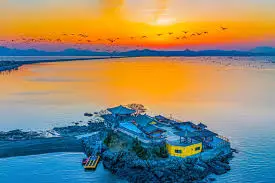
Seosan Travel: Places to Visit, 1-Night 2-Day Itinerary and City Stories
A city full of benevolence. The seo (瑞) in Seosan means auspicious, and san (山) means mountain. It's a land full of signs that good things are about to happen.
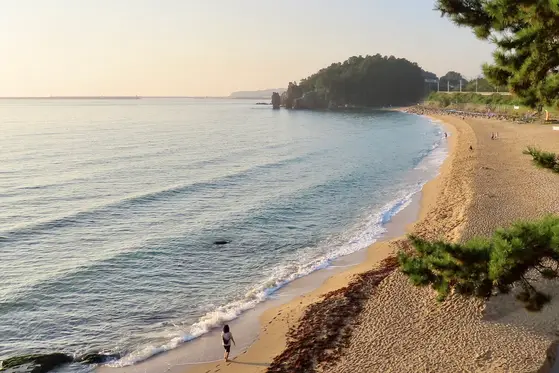
Donghae Travel: Places to Visit, 1-Night 2-Day Itinerary and City Stories
A city with stories that go beyond the sea. True to its name, it's the first to greet the red sunrise, and it holds the wide blue sea in its arms. But Donghae's real charm is that it doesn't stop at the sea.